What is a sportsman’s hernia?
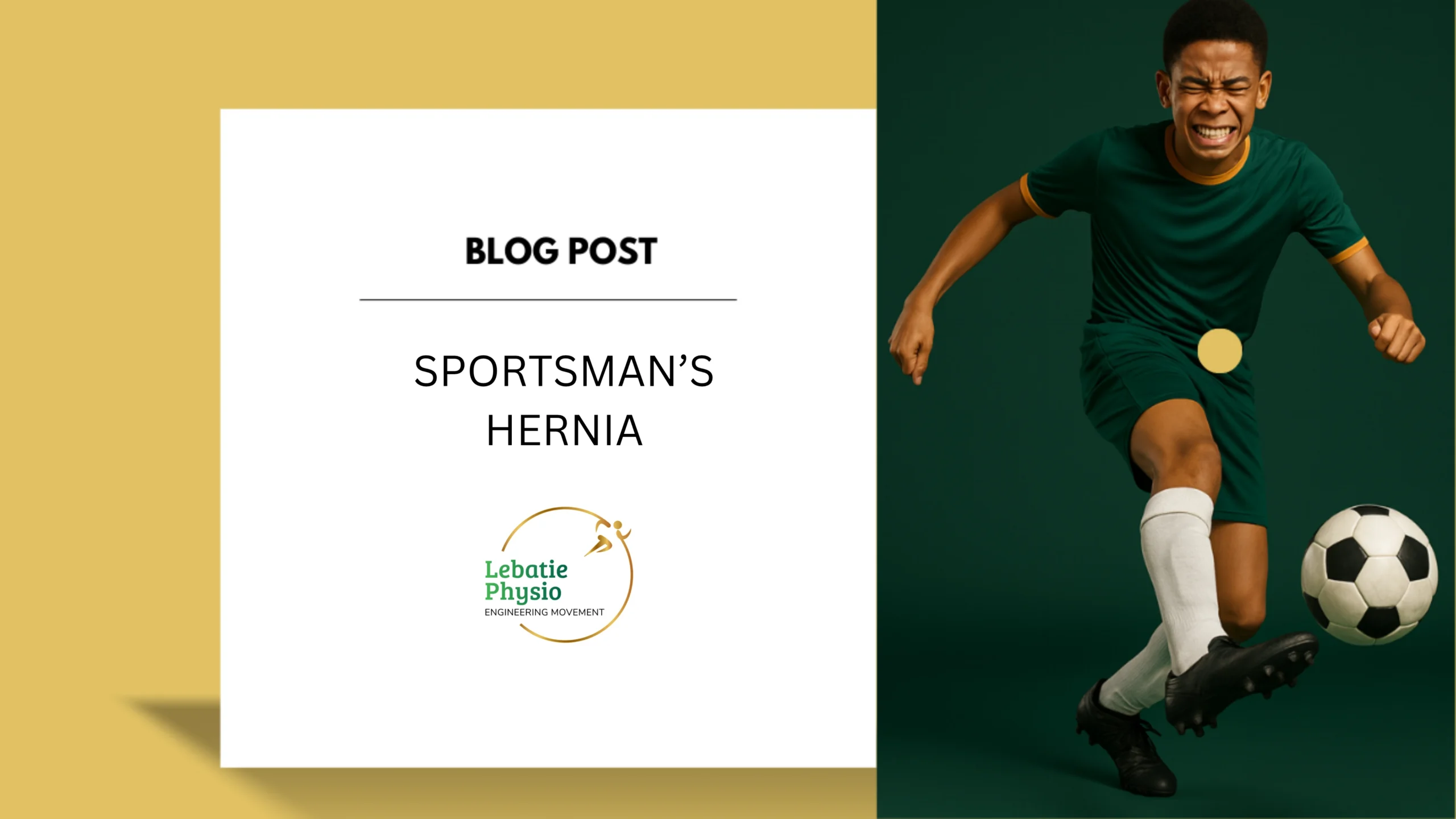
A sportsman’s hernia –often called athletic pubalgia – is not a true hernia. It refers to pain in the lower abdomen or groin caused by strain or overload of tissues around the pelvis, such as the adductors, abdominal wall, or pubic joint. It usually develops through repetitive twisting, kicking, and high-speed movements in sport (1).
What causes it?
Sportsman’s hernia is caused by repeated stress on the groin and pelvic region, especially during sprinting, cutting, turning, kicking, or sudden changes of direction. These movements can overload the soft tissues attached to the pubic bone, leading to pain and reduced function (2).
Who is most at risk?
It is most common in athletes who play multidirectional sports – such as football, soccer, rugby, and hockey – and typically affects those who perform rapid accelerations, decelerations, and twisting movements. Men are more commonly affected, but women can also develop it (3).
What symptoms should I look out for?
Typical symptoms include sharp or aching pain in the lower abdomen or groin, discomfort when sprinting or kicking, and pain that improves with rest but returns with high-intensity sport. Some people also feel pain when coughing, sneezing, or doing sit-ups (4).
How is a sportsman’s hernia diagnosed?
Diagnosis is made by combining a detailed clinical assessment – such as adductor squeeze tests – with imaging when needed. Healthcare professionals also look at running and movement mechanics because many athletes show altered pelvic or trunk control during pain-provoking activities (5).
Do I need surgery?
Most athletes do not need surgery. High-quality evidence shows that structured rehabilitation can be as effective as operative treatment for many types of groin pain. Surgery is usually considered only when symptoms don’t improve after a full course of targeted rehabilitation (6).
What does rehabilitation involve?
Successful rehab focuses on restoring strength and control around the pelvis, improving running mechanics, and gradually reintroducing multidirectional sport movements. Modern, movement-focused programs help athletes recover faster and address the underlying biomechanical factors behind groin overload (7).
How long does recovery take?
Most athletes improve significantly and return to sport within 8–12 weeks when following a structured, progressive rehabilitation programme. Recovery may take longer if symptoms have been present for many months or if multiple structures are involved (8).
References:
1. Sports Hernias: A Comprehensive Review for Clinicians.
2. Sportsmen’s Hernia.
3. Athletic Pubalgia.
4. Infographic – Groin Pain / Sports Hernia.
5. Hernia – BJSM Review.
6. Sports Hernia – Athletic Pubalgia: Evaluation & Management (PMC).
7. King E, et al. Clinical and biomechanical outcomes of rehabilitation targeting intersegmental control in athletic groin pain: prospective cohort of 205 patients. Br J Sports Med, 2018.
8. King E, et al. Clinical and biomechanical outcomes of rehabilitation targeting intersegmental control (Enda King PDF you uploaded).