What you need to know:
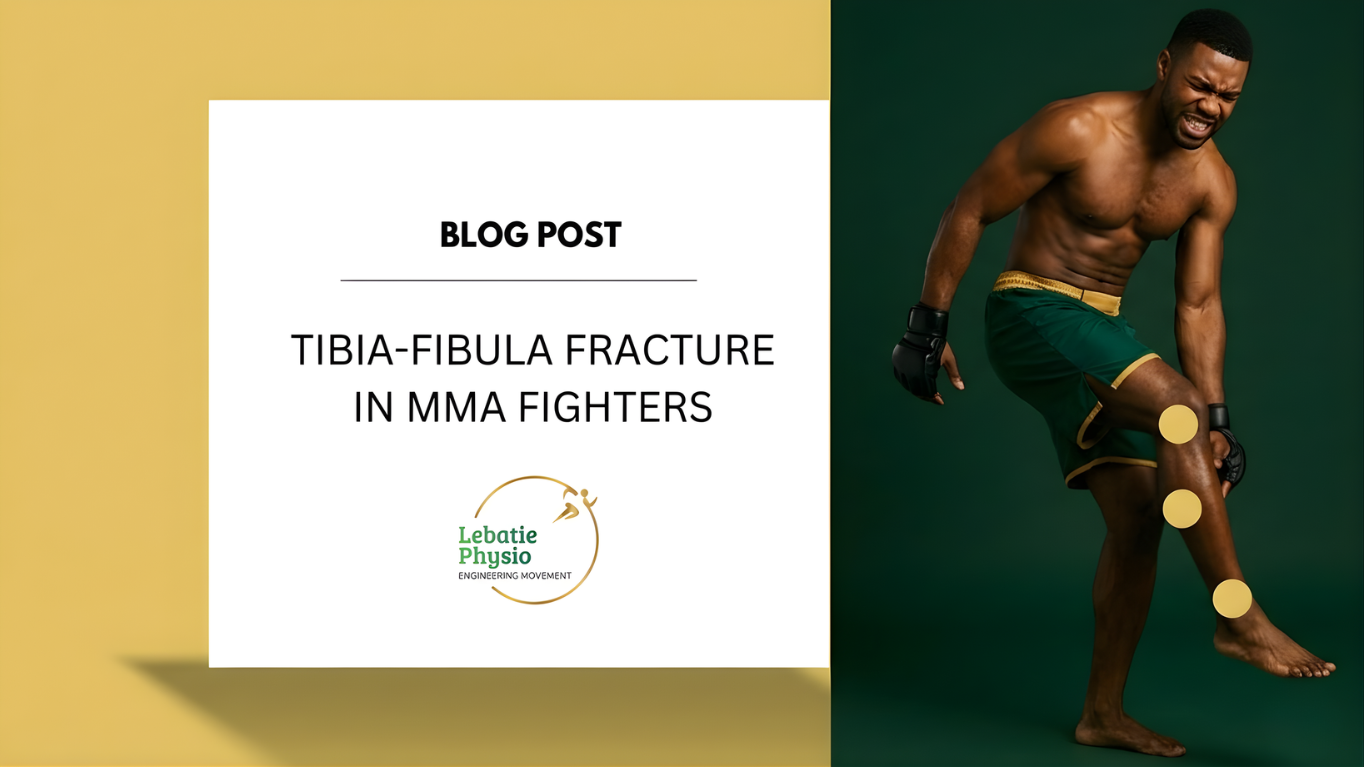
A fracture of the tibia and fibula (the two long bones of the lower leg) is one of the most serious injuries an MMA fighter can experience. While rare, it has been seen at the highest level of the sport and can look dramatic when it happens.This FAQ is designed to help fighters and active individuals understand the injury, recovery process, and what returning to performance really involves.
What is a tibia–fibula fracture?
The tibia is the main weight-bearing bone of the lower leg, and the fibula runs alongside it. A tibia–fibula fracture means one or both of these bones have broken.In MMA, this injury usually happens when a powerful kick is checked by an opponent’s knee or elbow, or when the lower leg is twisted under force.
Have professional fighters had this injury before?
Yes. Similar injuries have been seen in the UFC, most notably in:
- Anderson Silva
- Chris Weidman
- Conor McGregor
These cases show that even elite athletes with world-class conditioning can sustain this type of fracture.
Does this injury always need surgery?
Not always, but many MMA-related tibial fractures do.When surgery is required, the most common procedure is intramedullary nailing, where a metal rod is placed inside the tibia to stabilise the bone while it heals. The fibula is often left to heal on its own if alignment is acceptable.Surgery helps the bone heal, but it is only the first step in recovery.
How long does it take to heal?
Bone healing typically takes several months, but healing on X-ray does not automatically mean you are ready to return to training or fighting.Balance, Strength, power, confidence, impact tolerance, and movement quality all take additional time to recover.
What does rehabilitation involve?
Rehabilitation usually progresses through stages:
- Reducing pain
- Regaining movement
- Gradually increasing weight-bearing
- Building single-leg strength and balance
- Reintroducing running, jumping, and sport-specific movements
For fighters, rehab must also prepare the leg to handle twisting forces, impact, and kicking, which places much higher stress on the bone than everyday activities.
Is there clear guidance on post-surgery rehab and return to fighting?
This is an important point to understand – there is very little research specifically guiding:
- Post-operative rehabilitation for this injury in fighters
- Return-to-training or return-to-performance timelines
- When it is safe to resume full-contact sparring or competition
In fact, return-to-performance guidelines for MMA fighters do not currently exist. This means recovery must be individualised rather than rushed to meet a fixed timeline.
Will I be able to fight again?
Many fighters do return to training and competition after this injury, but it requires:
- Patience
- Structured rehabilitation
- Clear communication between your surgeon, physiotherapist, and coaches
The goal is not just to fight again, but to fight well and safely.
What is the most important takeaway?
A tibia–fibula fracture is a serious injury, but recovery is possible. Because scientific guidance on post-surgical rehab and return to MMA is limited, your rehab plan should be individualised, carefully progressed, and focused on long-term performance rather than speed.With the right team and the right approach, a return to high-level sport is achievable.