Avulsion injuries:
Tendons connect muscle to bone. Pelvic avulsion fractures are a type of fracture that occurs at the attachment site of a tendon to bone. This type of injury occurs more commonly in strong and athletic adolescents where growth plates are still open. The area of the growth plate is weaker than other bony areas and the strength of the muscle/tendon supersedes the capacity of the bone to withstand a strong, forceful and sudden contraction. The result is an avulsion fracture at the area where the tendon attaches to the bone.
Anatomy:
The pelvis is a complex structure composed of three bones, the ilium, ischium, and pubis, which are fused together to form a ring. These structures house the attachment sites for strong muscles of the hip and abdominals, as outlined in the list and image below.
- Iliac crest of ilium
- Abdominal muscles
- Anterior inferior iliac spine of ilium
- Sartorius (front of thigh muscle)
- Rectus femoris (one of the quadricep muscles)
- Ischial tuberosity of ischium
- Hamstring muscle (back of thigh muscle)
- Pubic symphysis of pubis
- Rectus abdominal muscle
Mechanism of Injury:
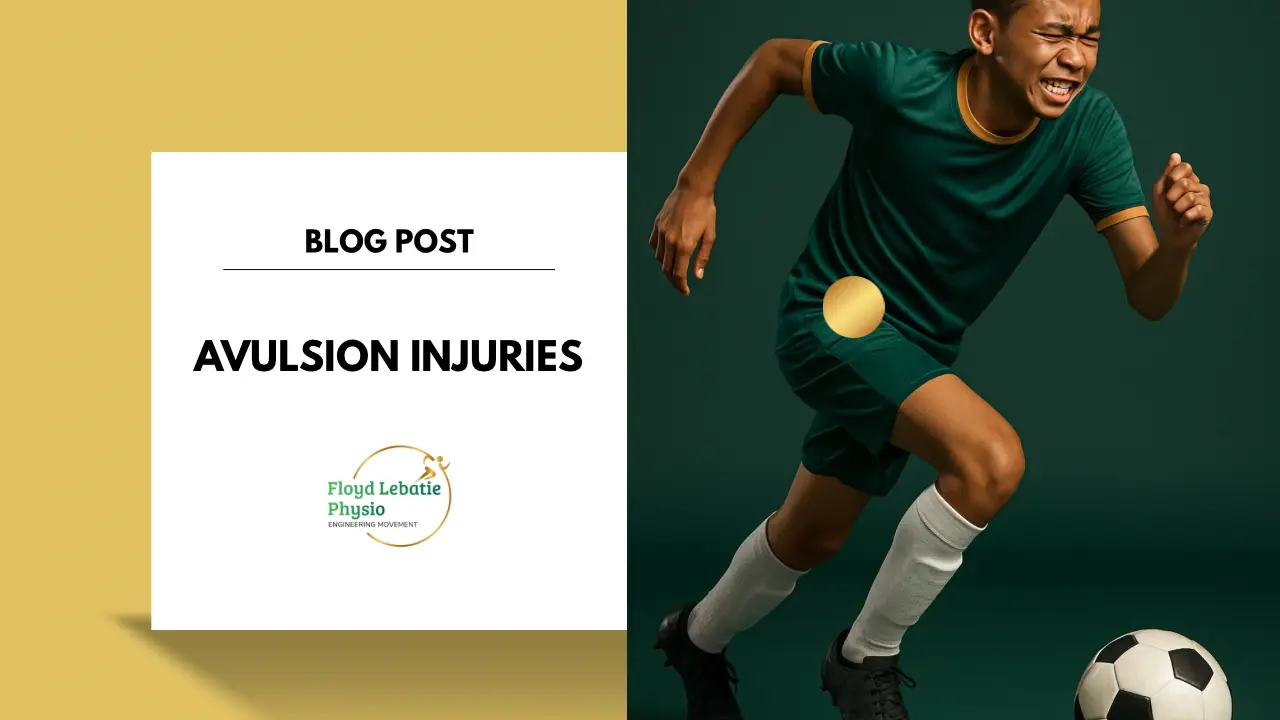
Avulsion injuries typically occur in adolescent athletes who partake in high-impact sports, where there is requirement of sudden acceleration or deceleration, jumping, or kicking. Avulsion fractures of the pelvis are usually as a result of a sudden and forceful contraction of a muscle that is attached to the bone, resulting in pulling the bone away at the attachment site.
Signs and Symptoms:
- Description of an audible ‘pop’
- Pain
- Difficulty weightbearing/walking
- Swelling at the site of injury
- Decreased active range of movement due to pain
- Significant loss of strength
Treatment:
Treatment for pelvic avulsion fractures depends on the severity of the injury and can range from conservative management to surgical intervention. Avulsion injuries resulting in 2 – 3cm separations may warrant surgery.
Early conservative management typically involves the following:
- Relative rest.
- Optimal loading/ weightbearing – use of crutches and progression non-weight- bearing to weight bearing
- Ice application.
Once the fracture site is healed, your physiotherapist will address the following:
- Active range of motion exercises.
- Strength training of muscles around the fractured site as well as those to address general conditioning.
- Balance training.
- Plyometric/jumping and landing training.
- Running
- Sprinting
- Sport specific drills.